





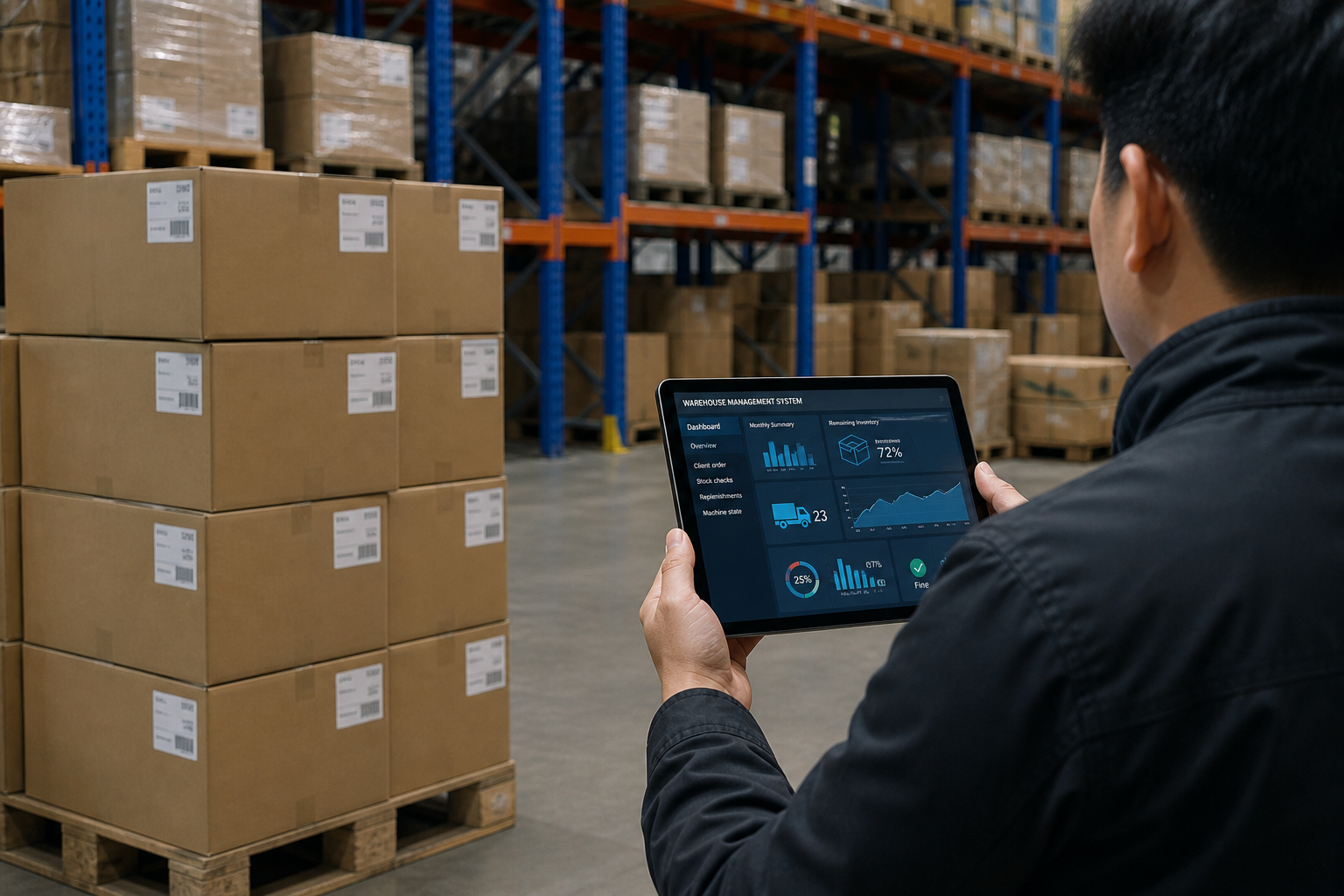
What is AI in Supply Chain Management?
AI in supply chain management uses data, machine learning, and automation to improve forecasting, optimize inventory, enable route optimization, detect risks early, and support faster decision-making across operations.
By analyzing large volumes of structured and unstructured data from multiple sources, AI helps businesses move beyond assumptions and make decisions based on real-time insights. This improves not only efficiency but also consistency in execution across the supply chain.
The real cost of supply chains is rarely visible—until it’s too late
A delayed shipment doesn’t just affect delivery timelines.
It disrupts planning, slows execution, and forces reactive decisions.
These issues rarely appear as major failures at first.
Instead, they build quietly—through missed updates, coordination gaps, and limited visibility.
In many cases, businesses only realize the impact when
- Costs start increasing unexpectedly
- Delivery commitments are missed
- Teams begin relying on constant follow-ups
In 2026, supply chains are no longer linear.
They are dynamic, interconnected, and constantly evolving.
And this is where AI in supply chain management is no longer optional—it’s essential.
From reactive operations to predictive supply chains
Traditional supply chains operate reactively:
- Problems occur, then action is taken
- Demand changes, then adjustments follow
But today’s environment requires something more.
With AI, businesses can:
- Anticipate disruptions before they happen
- Respond faster in real-time
- Continuously adapt operations
This shift is not just about technology—it’s about changing how decisions are made.The shift is clear:
From reacting to problems → to predicting and preventing them
Organizations that adopt predictive approaches are better equipped to manage uncertainty and maintain stability even in complex environments.
How AI in supply chain management reduces costs
AI-powered systems, including transport management systems (TMS), play a critical role in optimizing logistics, improving coordination, and reducing operational inefficiencies across the supply chain.
1. Smarter demand forecasting
AI improves forecasting accuracy by analyzing patterns, trends, and external signals such as market demand and seasonal variations.
✔ Reduces overstocking
✔ Prevents stockouts
✔ Improves inventory efficiency
Better forecasting directly reduces unnecessary inventory costs and improves overall planning.
2. Optimized inventory management
AI ensures the right materials are available at the right time by continuously adjusting inventory levels based on demand patterns.
✔ Lower storage costs
✔ Better cash flow
✔ Reduced waste
This helps businesses avoid both excess inventory and critical shortages.
3. Efficient logistics and transportation
AI optimizes routing and delivery planning, ensuring faster and more efficient movement of goods.
✔ Lower fuel costs
✔ Faster deliveries
✔ Fewer delays
Efficient transportation not only reduces cost but also improves customer satisfaction through timely deliveries.
4. Early risk detection
AI identifies disruptions before they impact operations by analyzing patterns and detecting anomalies in supply chain activities.
✔ Prevents costly delays
✔ Improves response time
✔ Strengthens continuity
This proactive approach reduces the impact of unexpected events.
5. Real-time execution visibility
AI provides clarity into on-ground operations, ensuring that businesses always have an accurate view of what is happening.
✔ Tracks actual progress
✔ Improves coordination
✔ Reduces execution gapsThis is where the largest cost savings are realized, as better visibility leads to better decisions and fewer errors.
Why many supply chains still struggle
Even with access to digital tools, many organizations continue to face:
- Fragmented systems
- Manual processes
- Lack of real-time visibility
- Poor coordination
In many cases, tools exist—but they are not connected.
This creates gaps between:
- Planning and execution
- Data and decision-making
- Teams and operations
The issue is not the absence of technology.
It is the lack of connected and structured execution across operations.
Bridging the gap between AI and execution
Understanding AI is only part of the equation.
The real value lies in how effectively it is applied within day-to-day operations.
Businesses that successfully reduce costs with AI typically:
- Integrate intelligence into existing workflows
- Align data with real-time execution
- Ensure visibility across every stage of operations
They focus on creating systems where:
- Information flows seamlessly
- Teams are aligned
- Decisions are based on accurate data
The focus is not just on adopting AI but on embedding it into how work actually gets done.
The future of AI in supply chain management
AI is no longer a differentiator—it is becoming a baseline capability.
What will define success is:
- How well AI is integrated
- How effectively it supports execution
- How clearly it connects insights with decisions
In the coming years, supply chains will become:
- More predictive
- More connected
- More resilient
Organizations that invest in structured, AI-enabled operations will be better positioned to handle growth and uncertainty.
Improving visibility with real-time transport intelligence
One of the key advancements in modern supply chains is the use of real-time transport visibility platforms (RTTVP).
These platforms help businesses:
- Track shipments in real time
- Identify delays early
- Improve coordination across logistics and operations
They also enable better communication between stakeholders, ensuring that everyone involved in the supply chain has access to the same information.
By enabling continuous visibility, RTTVPs reduce uncertainty, improve planning, and strengthen overall supply chain control.
Conclusion
Supply chains are becoming more complex with time.
The difference lies in how businesses respond to that complexity.
AI in supply chain management enables organizations to move from:
- Uncertainty → clarity
- Delays → control
- Reactive → proactive execution
As businesses continue to evolve, the ability to combine intelligence with execution will define long-term success.
If you’re exploring ways to bring more visibility, control, and efficiency into your operations, now is the time to rethink how your supply chain is structured and executed.
FAQs
How does AI in supply chain management reduce costs?
AI reduces costs by improving forecasting accuracy, optimizing routes and inventory, automating workflows, and identifying disruptions early.
Is AI suitable for mid-sized businesses?
Yes. AI solutions can be adapted based on operational scale and complexity, making them accessible to both small and mid-sized businesses.
What is the biggest benefit of AI in supply chains?
Real-time visibility combined with predictive decision-making.
Does AI replace human roles?
No. AI enhances human decision-making by providing better insights and recommendations.
Which industries benefit the most?
Industries such as construction, manufacturing, logistics, and retail benefit significantly.